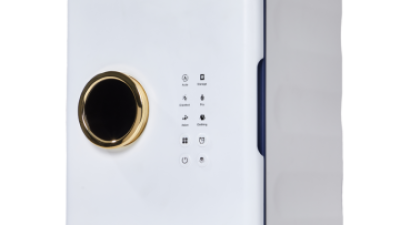
Looking ahead to 2026, the baby appliance market is really shifting towards safer, smarter, and more energy-efficient stuff around the house. If you check out reports from Grand View Research and Fortune Business Insights, they’re both pointing to steady growth in baby care products. That’s mainly thanks to rising incomes in cities, more shopping online, and higher safety standards that folks are expecting. Now, these reports don’t always agree on the exact size or scope of the market, so it’s a good idea for buyers to really compare how they define things—because that honestly makes a difference.
For global importers, finding a reliable OEM or ODM factory for baby appliances isn’t just about those eye-catching samples. You wanna see things like controlled assembly lines, traceable and safe materials, rigorous electrical testing, and solid quality documentation. And when it comes to product development, it’s best if the designs reflect real-life household scenes—imagine a parent checking water temperature at 3 a.m., or a tiny sterilizer sitting next to the sink, or a bottle warmer humming along amid a busy kitchen. Electrical safety testing from companies like Intertek, SGS, or UL can help, but keep in mind that certification requirements change depending on where you’re selling. Still, it’s smart to get independent verification to be totally sure.
The market opportunity is pretty clear, especially with products like the Baby-Safe Electric Thermos Keep Warm Hot Water Kettle. This kind of product hits the sweet spot for busy families—product designs that keep water warm, are safe to handle, and fit smoothly into daily routines. ODM teams can tweak heating ranges, add better insulation, customize interfaces, packaging, and even adapt labels for different markets. But hey, don’t let the ‘baby-safe’ label just be empty marketing talk—materials, thermal safety, leak-proof designs, and cleaning instructions should all be backed up with real evidence. Some factories tend to talk a lot but don’t back it up with enough testing—that’s definitely something to watch out for.
Good suppliers will provide pilot samples, keep records from inspections, perform risk assessments, and offer solid after-sales support. Getting ISO 9001 standards in place helps with consistency, but certification alone isn’t enough—you still need thorough product testing. When you’re looking at 2026, buyers should really consider a factory’s experience, engineering capabilities, clear communication, and their track record of reliability before jumping into a partnership—OEM or ODM alike.
In 2026, a leading baby appliance OEM ODM factory must offer more than low-cost production. Buyers need evidence of engineering experience, stable processes, and responsible testing. Experienced engineers should understand heating control, steam circulation, food-contact materials, and child-safe product design. That knowledge appears in detailed drawings, risk reviews, and repeatable test records.
Details matter.
Reliable factories build quality into every production stage, from incoming materials to final packaging. For a baby bottle sterilizer , engineers should verify temperature accuracy, drying performance, cycle stability, and safe handling. Production records should connect each unit with its components and inspection results. Independent laboratory checks can support compliance with applicable safety, electrical, EMC, and food-contact requirements.
Testing takes time.
Strong ODM support also requires practical communication. Engineers should test prototypes with real household routines, including wet bottles, crowded baskets, and limited counter space. Not every prototype works. Honest factories record failures, adjust designs, and explain trade-offs instead of hiding weak results. Clear communication helps buyers control changes, costs, and delivery risks. After-sales teams should provide repair guidance, spare-part planning, and usable technical documents.
A small failure can reveal a large process problem. Reliable cooperation grows through evidence, not attractive promises.
A capable baby appliance OEM ODM factory should understand daily care, not just assembly. Core categories include bottle warmers, sterilizers, drying units, formula preparation devices, baby food processors, and nursery humidifiers. Each product requires different control over heat, moisture, noise, and cleaning access.
Product development begins with real use scenarios. Engineers can map temperature across a bottle, test drying around narrow vents, and measure sound during nighttime operation. Prototype teams refine heating elements, sensors, pumps, containers, and control panels. Tooling specialists then prepare stable molds for repeat production. Firmware can support timed programs, alerts, child-safe locks, and fault detection where appropriate.
Details matter. Small gaps can trap milk residue. Loud pumps may disturb sleeping infants. An attractive interface can still confuse tired parents. Early samples often reveal these problems. That is useful.
Reliable development also requires material screening, electrical safety reviews, endurance testing, leak checks, drop testing, and production-line inspections. Documentation should track components, test results, revisions, and corrective actions. Experienced factories help global buyers adapt plugs, labels, manuals, packaging, and user interfaces for regional requirements. They should also explain limitations honestly, especially when a requested feature increases cleaning difficulty, cost, or maintenance risk. Good OEM and ODM work is not only customization. It is disciplined problem-solving from concept to shipment.
| Core Baby Appliance Category | Typical Products | Core Functions | Common Technical Specifications | OEM / ODM Development Capabilities | Key Safety and Compliance Considerations |
|---|---|---|---|---|---|
| Bottle Sterilizers and Dryers |
Steam sterilizers Sterilizer-dryer combinations Compact travel sterilizers |
Steam sterilization, hot-air drying, automatic cycle control, water-level monitoring, overheat protection and cycle-end alerts. |
Typical capacity: 4–8 feeding bottles Typical operating temperature: approximately 100°C for steam generation Typical drying options: timed hot-air cycles |
Bottle-rack customization, modular basket design, touch-button or display controls, private-label housing, localized plug and voltage options, firmware adjustment and packaging development. | Food-contact materials should be suitable for repeated heating and cleaning. Electrical versions require protection against overheating, moisture ingress and abnormal operation. Applicable requirements may include IEC 60335-1 and relevant national electrical safety rules. |
| Baby Bottle Warmers |
Water-bath warmers Fast warmers Multifunction warmers for milk and food |
Controlled warming, thawing, temperature maintenance, timer operation and preset programs for milk or complementary food. |
Typical target range: approximately 35–45°C for milk warming Suitable for bottles, pouches and small food containers Temperature sensing through thermistors or equivalent sensors |
Heating-program customization, bottle-holder tooling, sensor calibration, control-panel design, multilingual interface, app-connected options and regional power-cord configurations. | Temperature control should minimize overheating and hot spots. Materials in contact with water or food containers should be durable, cleanable and appropriate for the intended use. Clear instructions for safe feeding temperature are required. |
| Baby Food Makers |
Steam-and-blend machines Food processors Compact baby food cookers |
Steaming, blending, chopping, reheating, defrosting, pulse operation and portion preparation. | Typical features: stainless-steel or food-grade plastic food vessel, removable blade assembly, timed programs and safety interlock. | Blade and vessel redesign, recipe-program development, motor and gearbox selection, noise reduction, control-interface customization, tooling support and small-batch pilot production. | Food-contact components should meet applicable food-contact material requirements in the target market. The design should prevent operation when the lid or vessel is incorrectly installed and should protect users from moving blades and steam. |
| Baby Formula Preparation Machines |
Formula dispensers Water heating and mixing units Programmable preparation systems |
Water heating, measured dispensing, mixing assistance, portion control, temperature maintenance and cleaning reminders. | Typical functions include adjustable water volume, temperature settings, removable water tank and calibration for powder or liquid feeding workflows. | Custom dispensing volume, sensor integration, powder-container design, user-interface localization, cleaning-cycle programming, connectivity options and compatibility testing with specified feeding containers. | Products should not imply medical or nutritional dosing accuracy unless validated for that purpose. Water-contact parts must be cleanable, and designs should address microbial growth, scale accumulation, cross-contamination and incorrect assembly. |
| Baby Humidifiers |
Ultrasonic humidifiers Evaporative humidifiers Compact nursery humidifiers |
Humidity generation, adjustable mist output, low-water shutoff, timer control and optional humidity sensing. | Typical features: removable tank, adjustable output, auto shutoff, water-level sensor and optional humidity display. | Mist-output tuning, tank and nozzle redesign, low-noise optimization, antimicrobial-material evaluation, control-panel customization and smart-sensor integration. | The design should reduce risks from water leakage, electrical contact and excessive humidity. User instructions should cover cleaning, water replacement and the use of additives. Applicable requirements may include IEC 60335-1 and relevant household-appliance standards. |
| Baby Air Purifiers |
Portable nursery air purifiers HEPA-filter air cleaners Compact filter-fan units |
Particle filtration, fan-speed adjustment, filter-life indication, air-quality sensing and quiet or night operation. | Common filter architecture: pre-filter plus fine-particle filter, with optional activated-carbon layer. Performance should be verified using a defined test method and room-size assumption. | Airflow and noise optimization, filter cartridge development, sensor calibration, enclosure tooling, display and app customization, replacement-filter supply planning and packaging design. | Filtration claims should be supported by test data and clearly defined particle-size conditions. Ozone-generating functions require careful evaluation and market-specific compliance review. Electrical and electromagnetic compatibility testing may be required. |
| Baby Monitors and Nursery Sensors |
Audio monitors Video monitors Temperature and humidity sensors Movement-alert devices |
Audio or video transmission, temperature and humidity monitoring, night vision, two-way communication, alerts and local or cloud connectivity. | Typical options: 2.4 GHz wireless connectivity, rechargeable battery, low-light imaging, adjustable alert thresholds and encrypted communication features. | Hardware platform selection, camera and microphone tuning, firmware development, mobile application customization, cloud integration, user-account design and cybersecurity testing. | Connected products require privacy, data protection and cybersecurity controls. Radio products may require regional approvals, while camera and audio functions should include clear consent, security and data-retention policies. |
| Baby Scales and Health-Tracking Devices |
Infant weighing scales Length-measurement accessories Non-medical nursery trackers |
Weight measurement, tare function, hold function, unit conversion, memory storage and optional mobile synchronization. | Typical design features: curved infant platform, load cell sensor, large display, stable feet and removable washable surface. | Load-cell selection, calibration software, platform tooling, display customization, battery design, data-interface development and packaging for retail or institutional channels. | Accuracy claims must be supported by calibration and repeatability testing. Products intended only for home monitoring should be clearly distinguished from regulated medical devices unless the required regulatory pathway has been completed. |
| Baby Nail Care and Grooming Appliances |
Electric nail trimmers Low-speed nail files Grooming kits with LED lights |
Low-speed filing, interchangeable abrasive heads, LED illumination, soft-start operation and battery protection. | Typical features: guarded rotating head, low-voltage rechargeable battery, multiple abrasive grades and compact ergonomic housing. | Motor-speed tuning, head and abrasive customization, battery and charging design, ergonomic enclosure development, gift-set packaging and private-label accessory programs. | Moving parts should be guarded to reduce skin-contact risks. Battery packs and charging circuits require protection against overcharge, short circuit and overheating. Materials should be easy to clean and suitable for repeated household use. |
| Portable Baby Appliances |
USB-rechargeable warmers Portable sterilizing units Travel bottle accessories |
Battery-powered warming, compact sterilization support, temperature maintenance, USB-C charging and travel-friendly operation. | Typical features: rechargeable lithium-ion battery, insulated housing, temperature indicator, charging protection and compact storage design. | Battery-capacity planning, charging-interface customization, thermal-insulation design, travel-case development, regional charger configuration and durability testing. | Lithium-ion products require battery safety, transport and charger-compliance review. The product should include safeguards against overheating, deep discharge, short circuit and improper charging. |
Note: Technical ranges and compliance references are general industry guidance. Final specifications, test methods and regulatory requirements should be confirmed for the product design and destination market before production.
Reliable baby appliance development begins with practical cooperation. An experienced factory can support concept review, engineering design, mold development, and stable production. For a baby food processor , engineers should examine blade safety, food-contact materials, sealing performance, noise levels, and cleaning access. Each detail affects daily use. Small hands require careful design.
OEM projects follow the buyer’s specifications. ODM projects offer a tested product platform with flexible adjustments. These may include housing colors, control layouts, container sizes, packaging, and user instructions. Professional teams should provide prototypes, inspection records, material information, and production samples. Compliance planning must match the destination market. Requirements can differ widely.
Tips: Share target markets, estimated volumes, certifications, and preferred delivery dates early. Request a pilot run before large-scale production. Check the sample after washing, heating, and repeated operation. A perfect first sample is not always realistic. We have learned that honest feedback improves the final appliance. Factories should also explain minimum order quantities, tooling costs, warranty procedures, and quality checkpoints clearly. Transparent communication reduces surprises and helps global buyers build safer, more dependable baby appliance lines.
For global OEM buyers, safety begins before the first prototype. An experienced factory maps every plastic resin, heater, sensor, and wire to a controlled bill of materials. That traceability matters. IEC 60335-1 and relevant appliance requirements guide insulation, temperature limits, abnormal operation, and moisture protection. Market access still depends on local certification. Do not treat one certificate as universal permission.
The ISO Survey 2023 counted more than 1.2 million ISO 9001 certificates worldwide. Yet paperwork alone cannot control a wet countertop. At the production line, inspectors should verify incoming parts, torque values, grounding continuity, hi-pot performance, leakage current, and thermal cutoffs. Each baby bottle sterilizer and dryer needs documented cycle validation. Testing should measure steam temperature, drying temperature, exposure time, and recovery after door opening. Keep samples. Keep records.
The European Commission’s Safety Gate 2023 report listed 3,412 alerts, showing why post-market vigilance remains essential. Factories should retain serial-level records and investigate complaints within defined response times. Some audits look impressive but miss loose terminals or warped seals. That is uncomfortable. Corrective action must include root-cause review, retesting, and supplier escalation, not only replacement. Buyers should request audit trails, calibration certificates, sample test results, and independent laboratory reports. Claims need evidence.
Manufacturing technology determines whether a baby bottle warmer performs safely and consistently. A capable factory uses calibrated heating sensors, automated temperature testing, and controlled assembly lines. Each unit should pass checks for heating accuracy, insulation, electrical safety, and surface quality. Engineers can also adjust mold structures, control panels, and packaging for different markets. Practical production records matter more than attractive factory images.
Capacity must include people, equipment, and dependable materials. A strong OEM ODM partner separates prototype lines from mass-production lines. This reduces delays when testing a new design. Daily output should be supported by realistic labor plans and spare equipment. Supply chain teams should monitor heating elements, food-contact materials, electronic boards, and cartons. One delayed component can stop thousands of finished units. No factory is flawless. A rushed line trial may still expose weak inspection steps, which requires honest correction.
Tips: Ask for recent production data, quality inspection samples, and component traceability records. Check whether the factory can provide pilot samples before volume orders. Review backup suppliers for critical parts. Confirm shipping schedules, packaging tests, and document control. Small details matter. A baby bottle warmer needs stable performance across repeated use, not only a successful first test. Also, require clear change-control procedures, because an unreported material substitution can affect safety, delivery, and customer trust.
For global buyers, choosing a baby appliance OEM ODM factory in 2026 requires more than a polished catalog. A capable team should explain its design process, production controls, and testing records clearly. Request a physical sample, not only digital drawings. Hold it. Check button pressure, cable routing, surface finish, and cleaning access. Small details often reveal factory discipline. Ask for material traceability and applicable safety documents before discussing volume.
Customization may include colors, molds, control panels, packaging, and firmware. Each change affects tooling, testing, or lead time. Confirm which costs are one-time and which repeat per unit. Minimum orders vary by component. A factory may accept 500 finished units but require 3,000 custom cartons or 1,000 molded parts. Get this in writing. Pricing should list sample fees, tooling, unit cost, inspection, packaging, and freight assumptions. The cheapest quotation can hide expensive rework.
Delivery planning needs a realistic production calendar. Allow time for engineering samples, compliance checks, pilot runs, and final inspection. Ask how delays are reported and what happens after a failed inspection. Use clear shipment terms and milestone payments. One uncomfortable lesson is that buyers sometimes rush approval after one attractive sample. That is a weak habit. A second sample may expose heat, noise, or cleaning problems. Factories also make mistakes, so transparent correction matters more than perfect promises. Keep written records for every revision.
A multifunctional UVC baby bottle sterilizer can make everyday feeding safer and more convenient for busy parents. The customizable 3-in-1 design combines UVC disinfection, high-efficiency drying, and airtight storage in one compact appliance. It is suitable for baby bottles, pacifiers, teething toys, breast pump parts, and other small feeding essentials. By helping reduce exposure to germs on thoroughly cleaned items, it supports a more hygienic routine while saving parents the time and effort required for separate washing, drying, and storage steps.
Designed for practical infant care, the sterilizer uses food-grade, BPA-free materials and an enclosed UVC treatment process. After disinfection and drying, airtight storage helps keep items clean until the next feeding, reducing contact with dust and moisture. Model FBD-1 is available for factory-direct purchasing, bulk wholesale, and customized OEM/ODM projects. Flexible options can support different market requirements, packaging preferences, and functional specifications, making it a suitable solution for distributors, retailers, and childcare product suppliers seeking reliable daily hygiene equipment.
: It should show engineering experience, stable processes, and responsible testing. Look for detailed drawings, risk reviews, and repeatable test records. Promises are not enough.
Testing should cover temperature accuracy, drying performance, cycle stability, and safe handling. Inspectors should connect each unit with its components and results. Traceability matters.
The factory should use calibrated sensors and automated temperature testing. Each unit needs checks for heating accuracy, insulation, electrical safety, and surface quality. Test repeatedly.
Review recent output data, staffing plans, equipment lists, and spare capacity. Prototype and mass-production lines should remain separate when possible. Capacity is more than floor space.
Critical parts include heating elements, food-contact materials, electronic boards, and cartons. One delayed component can stop thousands of finished units. Ask for backup suppliers and traceability records.
Hold the sample and check button pressure, cable routing, surface finish, and cleaning access. Try wet bottles and a crowded basket. Small details reveal discipline.
Confirm costs for molds, colors, control panels, packaging, and firmware changes. Separate one-time charges from recurring unit costs. Get everything in writing.
Allow time for engineering samples, safety checks, pilot production, and final inspection. Ask how delays and failed inspections will be reported. One sample is not proof.
Request written correction plans, updated samples, and controlled revision records. A rushed approval can hide heating, noise, or cleaning problems. Factories are not flawless.
A leading Baby Appliance Oem/Odm Factory in 2026 combines product innovation, strict safety management, and reliable global production capabilities. It develops essential categories such as bottle warmers, sterilizers, formula makers, breast pumps, baby food processors, and nursery climate appliances, while supporting both OEM and ODM projects. From early concept design and engineering validation to tooling, testing, packaging, and mass production, the factory should provide flexible solutions for different market needs and usage environments.
Quality and compliance are central to every stage, including material selection, electrical safety testing, functional inspections, traceability, and certification support for target markets. Advanced manufacturing equipment, skilled teams, stable suppliers, and organized inventory systems help ensure consistent capacity and delivery performance. Global buyers should also evaluate customization options, minimum order quantities, transparent pricing, production lead times, after-sales support, and communication efficiency before establishing a long-term partnership.