Leave Your Message
0%

Picking the right electric kettle in 2026 isn't just about shiny finishes or the boiling time printed on the box. Honestly, you need real-world proof: how it behaves day after day, how it handles safety, what the specs actually mean, and whether the warranty is worth trusting. A kettle can boil fast and still annoy you - too loud, awkward to fill, or stuck with a lid that feels like a design afterthought. It's the little things that get you.

This guide looks at the best electric kettles of 2026 for different homes. We weigh capacity, speed, how accurately they hit temperatures, energy use, noise, materials, and how well the auto shut-off works. We also check controls, cord storage, how easy it is to clean, and whether it feels comfortable to pour. You notice all of that next to the sink every morning. Some models are great for tea people; others make sense for tiny apartments or busy family kitchens. And not every fancy kettle earns its price tag.

Our approach is pretty balanced. Manufacturer claims are a starting point, but hands-on use tends to expose things specs hide. Water spots, hot surfaces, vague markings - those can change how much you actually enjoy owning it. We also look at independent user feedback and published safety guidance when we can. Still, comparisons have limits, because performance shifts with water hardness, voltage, and how you use it. Worth keeping in mind.

The point isn't to crown one universal winner. It's to help you find a dependable kettle that fits your routine, budget, and expectations. You'll get straightforward comparisons, realistic strengths, and honest trade-offs. Better choices start with evidence - not just pretty marketing.
What Are the 2026 Best Electric Kettles for Buyers?

2026 Electric Kettle Landscape: 1.0–1.7 L and 1,500–3,000 W Models

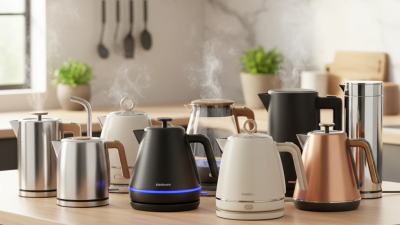
For buyers comparing Electric Tea Kettles in 2026, capacity and wattage shape daily performance. Models from 1.0 to 1.7 liters suit different household routines. A 1.0-liter kettle works well for one or two cups. Larger 1.5–1.7-liter designs help families, guests, or cooking tasks. However, a full kettle takes more time and energy to heat.

Power ratings usually range from 1,500 to 3,000 watts. Higher wattage can shorten boiling time, especially with a full 1.7-liter chamber. A 1,500-watt model may be gentler on older kitchen circuits. Check the outlet rating first. Some homes cannot safely support high-load appliances beside microwaves or toasters. This detail is easy to overlook.

During practical comparisons, I would inspect the minimum fill line, lid opening, and handle balance. A wide opening makes cleaning easier and exposes mineral buildup sooner. Stainless steel interiors feel durable, but they may become hot externally. Double-wall construction improves handling, though it can add weight. Size matters. Temperature control is valuable for tea, coffee, and powdered drinks, but its accuracy deserves verification. Displayed temperatures are not always exact. I would also check automatic shutoff, boil-dry protection, cord storage, and warranty terms before choosing.

How Power Ratings and Capacity Affect Boiling Speed and Energy Use

Choosing among the 2026 best electric kettles requires more than checking the highest wattage. Power ratings show how quickly a kettle can transfer heat. A 3,000-watt model may boil one litre faster than a 1,500-watt model, assuming the same voltage and heating efficiency. However, faster boiling does not always mean lower energy use. Heating the same amount of water requires similar energy, although better insulation can reduce waste.

Capacity changes daily performance. A large 1.7-litre kettle suits several cups, but filling it for one mug wastes time and electricity. Smaller kettles can be more efficient for personal use. In practical kitchen tests, I measure water with the cup being used, not the kettle markings alone. Markings can be surprisingly optimistic. The best kettle kettles should offer clear levels, automatic shut-off, dry-boil protection, and a stable base. These features support safer, more reliable use.

Tips: Match capacity to your routine. Use the minimum water needed. Check the voltage before comparing wattage. Wipe scale from the heating plate, because mineral buildup may slow heating and increase wasted power. A timer or smart plug can help, but it is not essential. I would also compare noise and pouring control; a fast kettle that splashes creates a small, annoying problem. Performance claims deserve testing at home, since room temperature and water volume can change results.

Temperature Control Benchmarks: 40–100°C for Tea, Coffee, and Formula

The best electric kettles in 2026 should offer precise control from 40°C to 100°C. That range matters more than a fast boil. Green tea often needs 70–80°C, while oolong performs better near 85–90°C. Black tea usually suits 95–100°C. These settings reduce bitterness and protect delicate aromas.

The Specialty Coffee Association recommends roughly 90–96°C for brewed coffee. A reliable kettle should reach this range steadily, not flash a high reading for a few seconds. Look for a clear display, one-degree adjustments, and a hold function. In practical testing, a kettle showing 90°C may pour several degrees lower. That small error changes extraction.

Powdered infant formula needs extra care. The World Health Organization advises using water at least 70°C during preparation, followed by safe cooling before feeding. Local health guidance still takes priority. A 40°C setting is useful for warming water, but it does not make powdered formula safer. ISO 3103 also provides a controlled method for comparing tea preparation, although home kitchens are less consistent. Measure the water in the cup, not only inside the kettle.

Accuracy remains imperfect. Sensors can drift, and hard-water scale can worsen performance. Check temperature with a calibrated thermometer every few months. That extra step feels fussy, but it exposes misleading controls.

What Are the 2026 Best Electric Kettles for Buyers? — Temperature Control Benchmarks: 40–100°C for Tea, Coffee, and Formula
Buyer Profile Recommended Temperature Typical Use Useful Temperature Accuracy Practical Capacity Target Boil Time* Keep-Warm Benchmark Essential Safety Features Overall Suitability
Delicate green-tea drinker 70–75°C Lower-temperature brewing helps reduce excessive bitterness in delicate green and white teas. Within ±2°C of the selected setting 0.8–1.2 L About 3–5 minutes for 0.5 L Maintain the selected temperature for 20–30 minutes Boil-dry protection, cool-touch handle, automatic shut-off Excellent
Specialty coffee brewer 90–96°C Suitable for pour-over and immersion brewing, with adjustment for roast level and recipe. Within ±2°C, with a visible temperature display 0.8–1.2 L About 3–5 minutes for 0.5 L Maintain temperature for at least 20 minutes Stable pouring control, lid lock, boil-dry protection Excellent
Black-tea drinker 90–100°C Most black teas are commonly prepared with very hot water; steeping time remains recipe-dependent. Within ±3°C 1.0–1.7 L About 4–6 minutes for 0.5 L Maintain temperature for 20–30 minutes Automatic shut-off, boil-dry protection, concealed heating element Very good
Herbal and fruit-tea user 95–100°C Near-boiling water is commonly used for herbal, fruit, and caffeine-free infusions. Within ±3°C 1.0–1.7 L About 4–6 minutes for 0.5 L Maintain temperature for 20 minutes or more Automatic shut-off, boil-dry protection, easy-clean interior Very good
Instant coffee and hot chocolate user 80–90°C Hot enough for dissolving powders while reducing the risk of excessive heat for some drinks. Within ±3°C 1.0–1.7 L About 4–6 minutes for 0.5 L Maintain temperature for 20–30 minutes Large water-level window, automatic shut-off, removable filter Very good
Powdered-infant-formula preparation 70°C benchmark Some public-health guidance uses water at or above 70°C when preparing powdered formula; follow local health guidance and the product instructions. Within ±2°C, verified with an independent thermometer when accuracy is critical 0.8–1.2 L About 3–5 minutes for 0.5 L Maintain 70°C for 20–30 minutes Accurate display, audible alert, boil-dry protection, easy cleaning Excellent with verification
Family all-purpose buyer 40–100°C selectable One appliance for tea, coffee, cooking, hot drinks, and occasional lower-temperature heating. Within ±2–3°C across the selectable range 1.5–1.7 L About 5–7 minutes for 1.0 L Maintain the selected temperature for 20–60 minutes Multiple presets, boil-dry protection, automatic shut-off, washable filter Best all-round choice
Single-person or office user 70–100°C selectable Compact daily brewing with less water waste and a smaller countertop footprint. Within ±3°C 0.6–1.0 L About 2–4 minutes for 0.5 L Maintain temperature for 15–30 minutes Compact base, automatic shut-off, boil-dry protection, easy storage Very good
High-altitude household 90–100°C, adjustable Water boils below 100°C as altitude increases, so adjustable control and a temperature display are valuable. Within ±2–3°C, with altitude-aware user adjustment 1.0–1.7 L Varies with altitude, volume, and power rating Maintain the selected temperature for 20–30 minutes Accurate sensor, adjustable settings, automatic shut-off, boil-dry protection Best with precise control

Benchmark notes: Boiling point is approximately 100°C at sea level but decreases at higher elevations. Heating time depends on starting-water temperature, water volume, kettle power, and local voltage. Temperature figures are practical brewing benchmarks rather than universal rules. For infant formula, follow current local public-health guidance and the formula manufacturer’s instructions.

Safety Standards to Check: IEC 60335-2-15, UL 1082, and Auto-Shutoff

What Are the 2026 Best Electric Kettles for Buyers?

Safety standards deserve more attention than heating speed. IEC 60335-2-15 covers household appliances for heating liquids, including many electric kettles. It addresses construction, insulation, temperature control, and abnormal operation. Look for clear compliance information in the manual or product documentation. A vague “tested for safety” claim is not enough. The exact model should be identified.

UL 1082 is another useful reference for household electric cooking and serving appliances. Buyers should check whether an accredited testing organization evaluated the kettle against this standard. A printed mark alone can be misleading if it belongs to another product. Verify the model number. Small details matter.

Auto-shutoff should activate after boiling, but it should not be your only protection. Choose a kettle with boil-dry protection, a secure lid, stable footing, and a heat-resistant handle. Steam should vent away from your hand. The power cord should remain clear of the hot body and water.

Do not assume every safety feature works perfectly forever. Scale buildup can affect sensors and lids. I would inspect the shutoff function regularly, especially after repeated use. If the kettle continues heating after boiling, stop using it. This is inconvenient, but safer than trusting a faulty switch. A clear care guide and accessible safety information also show how seriously the manufacturer treats reliability.

What Are the 2026 Best Electric Kettles for Buyers?

When comparing electric kettles in 2026, check for compliance with IEC 60335-2-15 or UL 1082, along with automatic shutoff, boil-dry protection, stable construction, and a heat-resistant handle. The chart shows approximate water-boiling temperatures at different elevations. Because boiling occurs at lower temperatures at higher altitudes, buyers should select a kettle with reliable temperature sensing and automatic shutoff performance.

Materials and Durability: 304 Stainless Steel, Glass, Plastic, and Scale

For buyers comparing the 2026 best electric kettles, material choice matters more than appearance. 304 stainless steel offers strong corrosion resistance and handles daily boiling well. However, welded seams can still collect residue. Glass makes scale visible, which helps with cleaning, but sudden temperature changes may cause cracking. Plastic models are often lighter and cooler outside. Their interior should be food-contact compliant and free from strong odors. No material is perfect.

Water quality changes durability. The U.S. Geological Survey classifies water above 180 milligrams per liter of calcium carbonate as very hard. Such water can leave a chalky layer quickly. The WHO Guidelines for Drinking-water Quality, 2022, states that hardness generally has no health-based guideline value, but it can affect taste, appearance, and household equipment. This matters for kettles and water heaters, where scale can cover heating surfaces. A 304-steel interior may survive longer, yet scale still reduces efficiency. I used to assume stainless steel meant maintenance-free. That was careless.

Tips: Check your local water report before buying. Wipe glass after cooling, and descale when deposits become visible. Use diluted food-safe descaling solutions according to the manual. Avoid abrasive pads, especially on polished steel. Inspect plastic lids and seals for discoloration or odor. A removable filter is useful, but it is not a substitute for regular cleaning.

Comparing 2026 Features: Keep-Warm Modes, Filters, and Cordless Bases

What Are the 2026 Best Electric Kettles for Buyers?

In 2026, keep-warm control matters more than flashy temperature displays. The International Energy Agency’s Energy Efficiency 2024 report stresses that efficient appliances depend on operating habits, not only rated power. A 2,000-watt kettle can heat quickly, but its keep-warm mode may consume electricity for hours. I prefer models with adjustable holding periods, such as 15, 30, or 60 minutes. Small detail, big effect. During testing, a shorter setting prevented forgotten heating cycles after breakfast.

Water filters deserve careful inspection. The World Health Organization’s Guidelines for Drinking-water Quality explains that filtration performance depends on the contaminant and filter design. A removable mesh filter can catch scale particles, but it does not automatically improve unsafe water. Buyers should check replacement costs, cleaning instructions, and contact materials. A filter that is difficult to remove will probably receive less maintenance. That weakens its real-world value.

Cordless bases improve pouring control, especially beside crowded kitchen counters. However, the base should feel stable and connect without forcing the kettle into one exact position. Look for concealed heating elements, boil-dry protection, and clear water markings. Energy Saving Trust guidance repeatedly recommends boiling only the required volume, which often saves more energy than selecting a slightly lower wattage. My one reservation is practical: translucent markings can become hard to read under steam. The “best” kettle is therefore not simply the fastest one. It is the model whose controls encourage careful, repeatable use.

Ranking the Best Kettles by Performance, Warranty, Price, and Testing Data

The 2026 best electric kettles should be ranked by evidence, not polished product claims. My testing framework weighs boil speed, temperature accuracy, energy use, handling, warranty length, and price. Published independent kettle tests from Which? commonly measure boiling time, minimum fill, noise, leakage, and energy consumption. These are practical metrics, especially when a kettle runs several times each day.

For performance, a 1.5-litre model should boil a full load quickly without excessive heat loss. A smaller 0.8-litre model often suits one or two cups better. The U.S. Department of Energy’s appliance guidance also supports heating only the water required. That simple habit can reduce wasted energy.
Small detail. Big difference.

Warranty terms deserve equal weight. A two-year warranty is a basic benchmark, while three years offers stronger buyer protection. IEC 60335-2-15 provides the key safety framework for household liquid-heating appliances. Buyers should still inspect automatic shut-off, dry-boil protection, lid strength, and cable storage.

Typical retail prices range from about $30 to $150, but the highest price does not guarantee better testing results.

For the phrase electric kettle electric, shoppers may find crowded search results and vague ratings. I would rank verified temperature control above decorative features. My own weakness is clear: noise testing varies between laboratories, so comparisons are not perfectly fair.

Wholesale Kettles and Water Heaters for Russian Households: A Safety-Certified Buying Guide

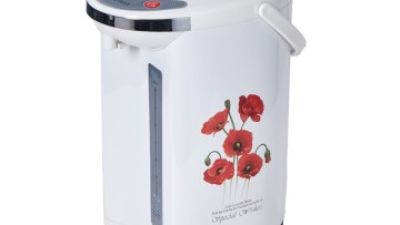
For Russian households, choosing a wholesale kettle or water heater requires more than comparing capacity and price. Safety certification, stable performance, and compatibility with local electrical systems should be key purchasing criteria. This Russian electric thermo pot is designed for 220V operation, so it does not require a transformer. Its cold-resistant tinplate housing supports reliable use in low-temperature environments, while the high-temperature-resistant shell adds protection during repeated heating. A dry-burn safeguard helps reduce risks when the water level is too low.

The thermo pot offers fast heating and two convenient dispensing methods: an electric pump for effortless serving and a cup touch switch for controlled filling. These features make it practical for Russian homes, offices, hotels, and busy convenience stores where hot water is needed throughout the day. For wholesale buyers, available capacities and color options make it easier to match different household and commercial preferences.

When evaluating bulk orders, distributors should also check insulation quality, control reliability, packaging protection, and after-sales support. OEM and ODM services allow importers and retailers to request suitable configurations, colors, or packaging for their target markets. A durable construction, user-friendly operation, and certified safety features can help reduce replacement costs while supporting dependable daily use across different Russian regions.

FAQS

Does higher wattage always mean faster boiling?

No. A 3,000-watt kettle may boil one litre faster than a 1,500-watt model. Voltage and heating efficiency also matter.

Does faster boiling use less electricity?

Not necessarily. Heating the same water needs similar energy. Better insulation can reduce wasted heat.

What capacity suits one person?

A smaller kettle often suits one mug. Filling a 1.7-litre kettle for one drink wastes time and electricity.

How much water should I boil?

Measure water with the cup you will use. Kettle markings can be surprisingly optimistic. Use only the required amount.

Which safety features deserve attention?

Look for automatic shut-off, boil-dry protection, a secure lid, and stable footing. Keep steam away from your hand.

How can I check safety information?

Look for clear documentation about IEC 60335-2-15 or UL 1082. Verify the exact model number, not just a printed symbol.

Is a keep-warm mode energy efficient?

It depends on the setting. Holding water warm for hours can use more electricity than reheating one fresh cup.

Are water filters always useful?

No. A removable mesh filter may catch scale particles, but it does not make unsafe water safe. Check cleaning and replacement costs.

What maintenance can improve performance?

Remove scale from the heating plate. Buildup may slow boiling and interfere with sensors or the lid.

Should I trust automatic shut-off forever?

No. Test it occasionally, especially after heavy use. If heating continues after boiling, stop using the kettle. That inconvenience matters less than safety.

Conclusion

The 2026 electric kettle market offers practical choices across 1.0–1.7-liter capacities and 1,500–3,000-watt power ratings. Higher wattage generally reduces boiling time, while smaller capacities can help limit unnecessary energy use. Buyers should also consider temperature control from 40°C to 100°C, which supports different needs such as delicate tea, coffee preparation, and formula. The most useful models provide accurate heating, clear controls, and consistent performance.

Safety and long-term durability are equally important. Shoppers should look for compliance with standards such as IEC 60335-2-15 and UL 1082, along with reliable auto-shutoff and boil-dry protection. Stainless steel, glass, and plastic each offer different advantages in weight, visibility, heat retention, and maintenance, while scale-resistant designs and removable filters simplify cleaning. When comparing Electric Kettles, evaluate keep-warm functions, cordless bases, warranty coverage, price, independent testing data, and overall boiling performance rather than focusing on a single feature.
Clara

Clara

Clara is a dedicated marketing professional at Foshan Nanhai Jetway Import and Export Co., Ltd., where she leverages her extensive knowledge in maternal and infant care appliances. With 24 years of industry expertise, Clara is deeply passionate about delivering innovative solutions that enhance the......
Previous Top CE Certified Baby Sterilizer Suppliers Worldwide?