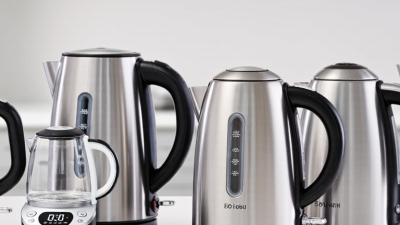
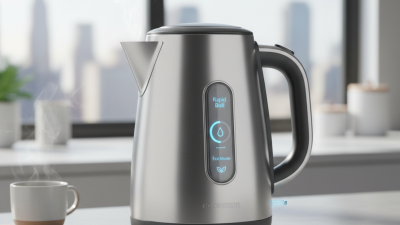
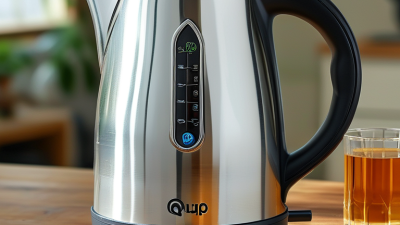
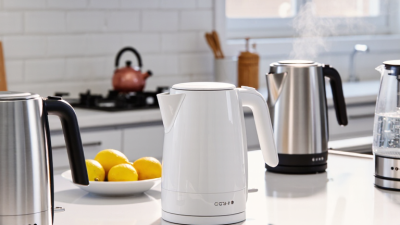
Honestly, hot water seems like the simplest thing in the world—until you try to pick the right appliance. I mean, a hot water kettle can make or break your daily routine: convenience, energy bills, taste, even safety in the kitchen. And here's the thing: the best one isn't necessarily the fastest or the priciest. It's more about how much water you actually boil, how often you use it, and—let's be real—how much counter space you've got to spare.
If you're looking at the electric kettle market, industry reports are a decent place to start. Grand View Research, for instance, tracks demand in this space—not just basic kettles but ones with temperature controls and snazzier designs. What's interesting is that people seem to care less about capacity and more about what the kettle can actually do. And on the safety side, there's IEC 60335-2-15, the standard that covers household appliances heating liquids. So it's not just about boiling water anymore. Yeah, it’s a solid benchmark—but keep in mind certifications can differ depending on where you buy and which model you get. Best to check the label and the docs that come with your product.
Honestly, small details matter more than you'd think. Take kettles: a big 1.7-liter one is great for a busy household, but if you're just making one cup, you're boiling way more water than you need. A narrow spout? That makes pouring steady. And a cool-touch handle is a lifesaver when your counter is packed. Sure, temperature presets are nice if you're into tea, but they drive up the price and add controls that a lot of people rarely touch. As for materials—stainless steel, glass, plastic—they each have their pros and cons when it comes to weight, seeing the water level, cleaning, and how they feel. Honestly, none of them is perfect.
Alright, so here's the deal: this guide walks you through all the important stuff—capacity, how fast it heats up, temperature accuracy, materials, safety features, maintenance, and overall value. We also point out claims you should double-check against the actual specs, because marketing talk can be pretty shiny. One thing to keep in mind though: just because a market is growing doesn't mean any particular model will be the most durable. Honestly, your daily habits play a bigger role than anything else.
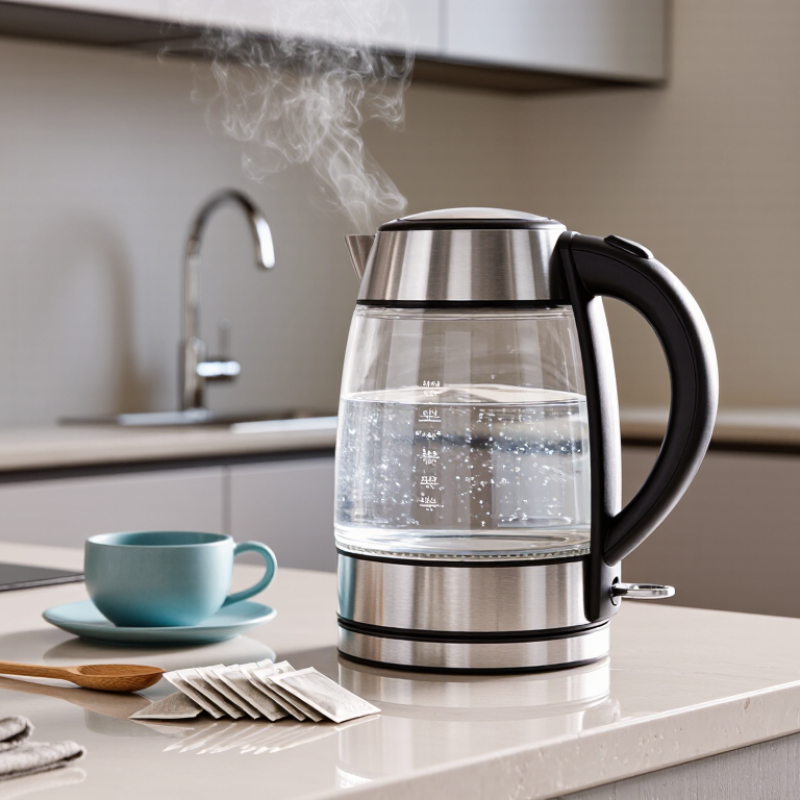
Define Your Needs by Household Size and Typical Kettle Capacity in Liters
Household size is a useful starting point when choosing a hot water kettle, but daily habits matter just as much. A person living alone may find a 0.8–1.0-liter kettle sufficient for tea, coffee, or instant oatmeal. Two people often do well with 1.0–1.2 liters. That may be enough. If several people make drinks at breakfast, a 1.5–1.7-liter model can reduce repeat boiling.
Think in cups, not just liters. A typical mug holds about 250–350 milliliters, so one liter usually serves around three mugs, depending on their size. Check the kettle’s minimum-fill mark, too. Heating more water than you need can waste time and energy, while filling below the marked level may affect safe operation. Small details matter.
A larger household may appreciate a 1.7–2.0-liter capacity, especially when preparing hot water for cooking as well as drinks. Still, bigger is not automatically better. A full kettle can feel heavy when poured, and a large unit may take up valuable counter space. Consider how many people use hot water at the same time, rather than counting everyone in the home. I might choose a smaller capacity for a busy kitchen with staggered routines; that judgment is not perfect, but it reflects actual use better than household size alone.
Compare Rated Power in Watts and Boil-Time Test Results
A kettle’s rated power, shown in watts, gives a useful starting point, not a complete performance score. Higher wattage often means faster heating, but water volume, starting temperature, and kettle design also affect the result. Compare models using the same amount of water, such as 500 millilitres, at the same starting temperature. Record the time from switching on until the kettle clicks off. Small differences matter.
Look for repeated boil-time tests, not a single impressive result. A stopwatch, measured water, and several runs can reveal whether a kettle heats consistently. Note the room temperature and whether the lid was fully closed; small changes can affect timing. If the results list only “fast boiling,” without test conditions, treat that claim cautiously. My first comparison would be wattage alone, but that misses too much.
Searches for “Russia hot water kettle” may show appliances rated for different electrical systems. Check the voltage label and local supply before comparing wattage or buying. For everyday use, weigh measured boil time against the amount you usually heat. A kettle that saves seconds on a full pot may offer little benefit when you make one cup. Not always.
How to Choose the Best Hot Water Kettle? — Compare Rated Power in Watts and Boil-Time Test Results
Boil-time comparison for a 1.0 L water load (illustrative estimates by rated-power class; no specific kettle models are represented).
| Rated power |
Water volume |
Starting temperature |
Target temperature |
Estimated boil time |
Estimated electricity used |
| 1,500 W |
1.0 L |
20°C |
100°C |
About 4 min 22 sec |
About 0.109 kWh |
| 1,800 W |
1.0 L |
20°C |
100°C |
About 3 min 39 sec |
About 0.109 kWh |
| 2,000 W |
1.0 L |
20°C |
100°C |
About 3 min 17 sec |
About 0.109 kWh |
| 2,200 W |
1.0 L |
20°C |
100°C |
About 2 min 59 sec |
About 0.109 kWh |
| 2,400 W |
1.0 L |
20°C |
100°C |
About 2 min 44 sec |
About 0.109 kWh |
Method note: These are calculated estimates, not physical test results. They assume 1.0 kg of water heated from 20°C to 100°C and 85% heat-transfer efficiency. Actual boil times vary with kettle design, water volume, starting temperature, altitude, and power supply.
Measure Energy Use in Watt-Hours per Liter Boiled
How to Choose the Best Hot Water Kettle?
Compare kettles using watt-hours per liter boiled, not wattage alone. Wattage mainly indicates heating speed; measured energy shows how much electricity each task uses. The NIST Chemistry WebBook reports liquid water’s specific heat at about 4.18 kilojoules per kilogram per degree Celsius. From 20°C to 100°C, one liter therefore needs roughly 93 watt-hours in an ideal calculation. That is the baseline, not a promise of real-world performance. Heat escaping through the kettle and a warmer or colder starting temperature change the reading. Measure with a plug-in energy monitor, boil one liter, and divide the watt-hours used by the volume heated. Repeat three times.
Tips: Keep the starting temperature and water volume consistent. Record keep-warm energy separately; a small standby draw can add up over hours. Compare like with like. If reviewing listings with the phrase “Baby-Safe Electric Thermos Keep Warm Hot Water Kettle Factory Wholesale For Household,” treat “baby-safe” as a claim to verify, not proof of safety. Check documented temperature controls and relevant product testing. This metric is useful, but it cannot capture every practical difference between kettles.
How to Choose the Best Hot Water Kettle? Measure Energy Use in Watt-Hours per Liter Boiled
The chart shows the ideal heat energy needed to bring one liter of water to 100°C, calculated using water’s specific heat capacity (4.186 kJ/kg·°C). Actual electricity use will be higher because kettles lose heat to their surroundings. To compare kettles, measure electricity use with an energy meter and divide the watt-hours by the liters boiled.
Check Electrical Safety Against IEC 60335-2-15
When choosing a hot water kettle, check whether its exact model has been assessed against IEC 60335-2-15. This standard addresses safety requirements for household appliances that heat liquids, including kettles. The reference is useful, but it is not a promise that a kettle can never fail.
Look for clear compliance information in the product documentation, such as the applicable standard edition and test or certification details. An IEC reference alone does not mean IEC has certified the product. Where possible, check that an independent testing body assessed the same model number. Small detail, big difference.
Inspect the kettle itself, too. The cord should sit securely, the handle should feel stable when the kettle is full, and the lid should close without force. Check for dry-boil protection and automatic shutoff, then confirm their operation using the manual’s safe instructions. Do not test protection by deliberately running the kettle dry. It is easy to overread a safety mark; even a compliant appliance needs sensible care. Keep the base and plug dry, and stop using the kettle if its cord, housing, or switch becomes damaged.
Evaluate Temperature Accuracy in Degrees Celsius
Temperature accuracy matters more than a kettle’s display suggests. Specialty Coffee Association brewing guidance places the recommended water range at 92–96°C. A kettle reading 3°C high could therefore push coffee outside that range. Check whether the manual states an accuracy tolerance, such as ±1°C, rather than relying on a precise-looking screen. The number of decimal places is not proof of accuracy.
Test the kettle with a calibrated food thermometer at several settings, such as 80°C and 95°C. Stir gently, then compare readings promptly; heat escapes as steam, so timing matters. NIST reference data gives water’s boiling point as 100°C at standard atmospheric pressure. At higher elevations, local boiling temperatures are lower, so a 100°C target may be unrealistic. Still, this test is not perfect. Thermometer placement and response time can skew results. A Hot Water Bottle Warmer serves a different purpose, so don’t treat its temperature controls as kettle standards. Look for repeatable readings, clear tolerance information, and settings suited to the drinks you actually make.
Compare Limescale Control, Filter Design, and Cleaning Access
An electric water kettle is easier to live with when its scale control, filter, and opening fit your routine. Hard water can leave chalky flakes around the base and spout. Some kettles have concealed heating elements, but no design prevents mineral buildup. Check the care instructions before choosing. A removable mesh filter can catch loose flakes, not dissolve scale or soften water. Look for a filter that lifts out without awkward tools. Also inspect the lid opening: a wide mouth lets you reach the bottom with a soft cloth.
Tips: After the kettle cools, rinse the filter and wipe the interior with a non-abrasive cloth. Descale only as directed in the manual; harsh scrubbing can damage surfaces. Small, regular care helps.
In daily use, cleaning access matters more than a polished feature list. If your hand cannot reach the corners, residue may linger. I used to focus on capacity and boil speed, then noticed the filter was harder to clean than expected. That trade-off is easy to miss. Compare replacement-filter availability and whether the lid stays open while you rinse. Choose a kettle you can inspect, not just admire.
Assess Handle, Lid, and Auto-Shutoff Performance in Safety Tests
How to Choose the Best Hot Water Kettle?
A secure handle should stay steady when the kettle is full, not flex or twist during pouring. Check whether your fingers clear the hot body, and whether the grip stays comfortable after repeated boils. The lid matters, too: it should latch firmly, open without a sudden steam blast, and remain attached when tilted. Small details matter. IEC 60335-2-15 sets safety requirements for household appliances that heat liquids, offering a useful reference point when comparing safety claims.
Test the automatic shutoff with both small and near-maximum fills, and listen for a clear click when boiling ends. Repeat the test; one successful cycle proves little. WHO estimates that burns cause about 180,000 deaths worldwide each year, but this figure covers all burns, not kettle injuries. It still underlines why scald prevention deserves attention. During pouring, watch for drips around the spout and check whether steam escapes near the handle. A kettle can pass a quick kitchen check and still feel awkward when full. I would not treat a single boil test as proof of long-term reliability.
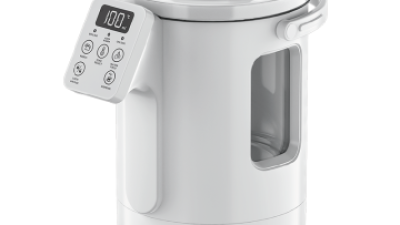
Precision-Temperature Glass-Lined Thermo Pot: A Better Way to Brew Tea and Coffee
A precision-temperature glass-lined thermo pot makes everyday brewing more consistent by matching water heat to the drink. The Specialty Coffee Association’s brewing guidance places the ideal water temperature for coffee at 195–205°F (90–96°C). For tea, adjustable settings help avoid using overly hot water for more delicate leaves, while precise dispensing gives you better control over each pour. The National Coffee Association’s 2024 National Coffee Data Trends report found that 67% of U.S. adults drink coffee every day—one reason a dependable, easy-to-use kettle can be a practical addition to a home or office routine.
Designed for tea and coffee enthusiasts, this electric kettle combines adjustable temperature controls with rapid heating and an automatic shut-off function. Its glass-lined interior supports a clean-tasting brew, and the easy-to-clean design helps simplify regular use. Whether you are preparing a single cup or serving colleagues, controlled heating and accurate pouring make it easier to brew at a preferred temperature without unnecessary guesswork.
Manufactured in an advanced factory by a trusted China supplier, the kettle is built with a focus on quality and reliable performance. Its combination of temperature precision, convenient dispensing, and safety features makes it well suited to kitchens, break rooms, and workspaces where a better cup starts with well-heated water.
Conclusion
Choosing the best Hot Water Kettle starts with matching its capacity to your household size and everyday needs. Compare the rated power in watts with real boil-time results, since higher power does not always guarantee the most practical performance. To understand running costs, look at energy use in watt-hours per liter boiled and consider how often you use the kettle.
Check that the kettle meets relevant electrical safety requirements, including IEC 60335-2-15, and assess whether its temperature settings are accurate in degrees Celsius. Limescale filters, accessible cleaning surfaces, and a design that is easy to maintain can make a difference over time. Finally, evaluate the handle and lid for comfortable, secure use, and confirm that auto-shutoff works reliably. Considering these factors together helps you choose a kettle that suits your routine while balancing convenience, efficiency, and safety.