Finding a trustworthy wholesale supplier for baby appliances really can shape everything — from how safe the products are to your profit margins and how much your customers trust you. If you're buying from around the world, it’s not just about shiny catalogs and low minimum orders anymore. What truly matters is finding suppliers who have steady production, transparent testing records, quick and friendly communication, and practical exporting know-how.
In this guide, we’ll walk through what makes a top 10 list of baby appliance wholesale suppliers for global buyers. We look at things like factory capacity, support for private labels, quality of samples, packaging standards, warranty service, and how ready they are for shipping. A supplier you can rely on should be able to explain things like temperature controls, food-safe materials, electrical safety measures, and cleaning instructions in simple, straightforward language. And it’s a big plus if they can share up-to-date technical documents instead of vague promises.
Safety, obviously, comes first. For products like the Baby-Safe Electric Thermos (check it out here: Baby-Safe Electric Thermos), buyers should really pay attention to how accurate the heating is, how well it insulates, whether it has an automatic shut-off feature, and if the plug fits properly. Little details matter—like a loose lid, unclear warning labels, or weak packaging. These might seem small but can lead to costly issues down the line.
As pediatrician Dr. Benjamin Spock used to say, “Trust yourself. You know more than you think you do.” That advice totally applies when you're sourcing products, but the confidence you have should come from actually verifying things. Make sure to test samples, check out the supplier’s track record, and compare what they promise with real performance.
Of course, no supplier is perfect. Even seasoned factories can have communication hiccups or take longer to customize products. It’s good to acknowledge that upfront. The best baby appliance wholesale partner isn’t always the cheapest — it’s the one who openly documents risks, fixes issues as they come up, and supports consistent quality across all your international orders. This overview is just a helpful starting point for doing a deeper dive into potential suppliers.
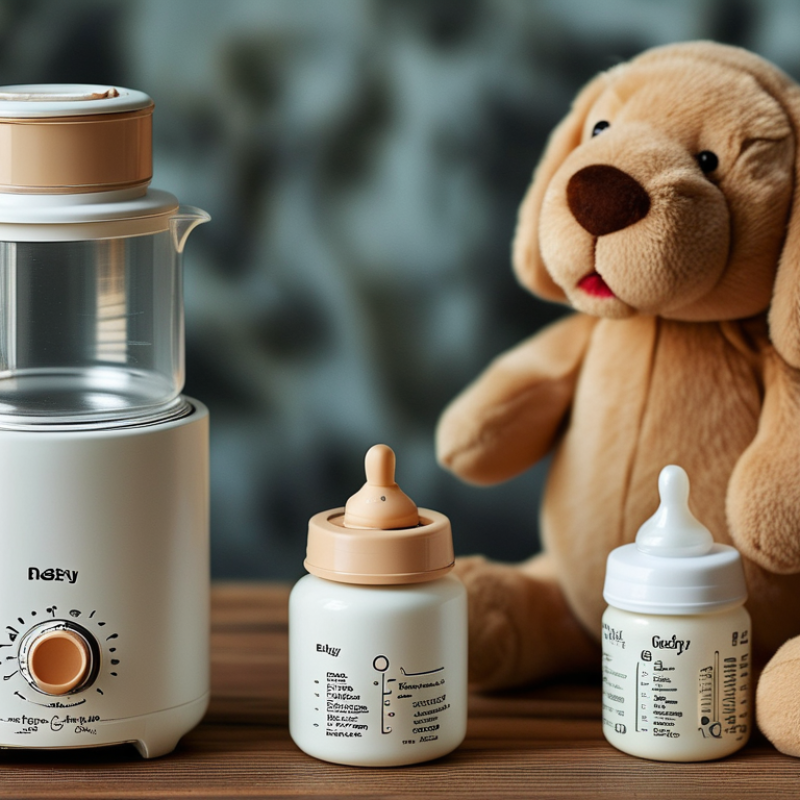
Baby appliances are practical devices supporting feeding, cleaning, warming, and nursery care. Common examples include bottle warmers, steam sterilizers, formula mixers, humidifiers, thermos pots, and monitoring equipment. Grand View Research estimated the global baby products market at USD 215.13 billion in 2022. It also projected a 5.9% annual growth rate from 2023 to 2030. This expanding market increases pressure on buyers to secure stable wholesale supply.
Wholesale suppliers help global buyers manage volume, packaging, documentation, and delivery schedules. Reliable suppliers should provide material declarations, electrical test reports, user instructions, and traceable batch records. Requirements differ across destination markets. A supplier familiar with regional compliance can reduce costly shipment delays. It can also support safer product customization. An experienced thermos pot Supplier should explain insulation performance, food-contact materials, leakage testing, and temperature retention. Small details matter.
Tips: Request samples before placing bulk orders. Test lids, seals, cables, and controls under daily-use conditions. Compare the supplier’s test documents with your target market’s rules. Keep written records of every revision. Some buyers focus too much on price. That is understandable, but it can create hidden quality costs. I have seen attractive samples fail after repeated washing. Wholesale decisions need patience, technical questions, and occasional reconsideration.
Selecting baby appliance wholesale suppliers requires more than comparing prices. In real sourcing work, I examine product safety, factory experience, and documentation before discussing large orders. Suppliers should provide clear test reports, material details, user instructions, and batch traceability. Ask how they control heating, charging, insulation, and food-contact components. Small details matter.
Request product samples from different production batches. Check temperature stability, noise levels, surface quality, packaging strength, and cleaning access. A reliable supplier accepts reasonable testing without avoiding difficult questions. Independent laboratory reports should match the exact model and current production version. Verify factory audits, quality-control procedures, warranty terms, and spare-parts availability. Photos alone prove very little.
Commercial terms also deserve careful review. Compare minimum order quantities, lead times, inspection arrangements, payment protection, and shipping documents. Suppliers serving several regions may understand labeling and electrical requirements better. However, broad market experience does not guarantee consistent quality. I would still inspect every sample. A perfect supplier does not exist. My own evaluation can be incomplete, especially when factory changes occur after approval. Build regular inspections into the agreement, and keep written records of every technical decision. Clear communication, honest limitations, and responsive after-sales support often reveal more than an impressive catalog.
When comparing baby appliance wholesale suppliers, inspect the product, not just the catalogue. Request recent test reports for each model, production batch, and destination market. A certificate should show the laboratory, standard, report number, test date, and model reference. ISO 9001 describes quality management, but it does not prove product safety. Likewise, a declaration of conformity needs supporting evidence.
Use recognized standards that match the appliance. Bottle warmers, sterilizers, and feeding devices may require different electrical, thermal, and material tests. Check insulation, leakage current, overheating protection, food-contact materials, cord strength, and small detachable parts. The European Commission’s Safety Gate report recorded 3,412 product alerts in 2023, with electrical appliances and equipment representing about 7%. That figure makes traceability more than paperwork.
Ask suppliers for factory inspection records and corrective-action reports. Visit the production line when possible. Watch whether workers verify thermostat cut-offs and inspect plugs individually. Request random samples from finished cartons, not carefully prepared showroom units. Independent laboratories can repeat key tests before shipment. Good suppliers should accept this process without resistance.
There is room for doubt. A polished certificate file may not represent every batch. Test one carton from a real shipment. Compare serial numbers, labels, manuals, and packaging warnings. Confirm that claims match the importing country’s rules, because marking requirements differ across markets. Keep records for recalls, complaints, and replacement parts. Cheap pricing can hide weak testing, unstable materials, or poor after-sales control. Industry data changes; buyers should verify each report and standard before signing.
International buyers need more than a low quotation. They need suppliers who understand infant safety, export documentation, and regional electrical standards. The global baby care products market was valued at about USD 215 billion in 2023, according to Fortune Business Insights. That scale attracts many new factories. Not all deserve long-term trust.
A practical shortlist should include ten suppliers with tested product ranges, stable production, and transparent communication. Check baby bottle sterilizer models for voltage options, plug types, cycle temperature, and automatic shutoff. Ask for test reports, material declarations, carton dimensions, and sample records. The U.S. CDC advises daily cleaning of infant feeding items and sanitizing them for younger or medically vulnerable infants. Suppliers should explain cleaning instructions clearly. Vague manuals are a warning sign.
Compare MOQ, lead time, spare parts, warranty handling, and port experience. Request a video inspection of the packing line. Inspect one sealed carton yourself. A polished catalog proves little. The lowest price may reflect thinner plastic, weaker heating elements, or poor quality control. I have seen buyers overlook replacement lids and regional plugs. That mistake becomes expensive after shipment. Certification claims also need verification through an accredited laboratory, not only a supplier-produced PDF. Market demand is growing, but judgment still matters more than a crowded product list.
Wholesale buyers should compare baby appliance suppliers by product depth, landed cost, and MOQ rather than catalog size alone. A broad factory range may include bottle warmers, sterilizers, breast pumps, and a baby food processor. Specialized distributors usually offer fewer models but faster replenishment and clearer compliance documents. Fortune Business Insights valued the global baby food market at about US$88.9 billion in 2023, supporting continued demand for preparation appliances and feeding accessories.
Indicative factory pricing often ranges from US$18 to US$55 for compact processors, depending on motor power, heating functions, materials, and packaging. Basic sterilizers may start near US$12, while multifunction units can exceed US$45. MOQs commonly fall between 100 and 1,000 units. Smaller quantities may cost more per unit, but they reduce inventory risk. Check whether the quotation includes molds, manuals, testing, spare parts, and export packaging. Hidden costs matter.
Supplier performance also depends on evidence. Request recent inspection records, electrical test reports, food-contact material declarations, and production photos with visible dates. Euromonitor International identifies convenience and health positioning as important forces in baby-care purchasing, but supplier claims still need verification. A low MOQ is not automatically better. It can signal limited production capacity or weaker customization. I would test a small shipment first, record defect rates, and compare actual delivery time against the contract. That step is easy to skip. It should not be.
Global buyers assessing baby appliance wholesalers should examine the entire order journey, not only unit pricing. Experienced suppliers explain carton dimensions, electrical specifications, lead times, and destination duties before payment. Ask for a written shipping plan covering sea, air, and regional fulfillment options. Clear documents reduce customs delays. Still, estimates can change during holidays or port congestion, so buyers should keep buffer time and confirm insurance responsibilities in writing. That detail often separates a dependable supplier from a persuasive salesperson.
Private labeling requires more than printing a logo. A capable partner can discuss safe packaging, instruction manuals, color consistency, barcode placement, and sample approval. Request a pilot batch before committing to a large global order. Review product photos, packaging tests, and translated labels with someone familiar with the target market. Mistakes happen. A missing warning or unclear voltage statement can create returns, delays, and customer distrust. Suppliers should identify responsible contacts and preserve approved artwork for repeat production.
After-sales support reveals operational maturity. Ask how suppliers handle damaged cartons, missing parts, warranty claims, and technical questions across time zones. A useful agreement states response times, replacement procedures, evidence requirements, and spare-parts availability. Keep serial records and inspection photos from each shipment. These records help resolve disputes fairly. Some wholesalers promise fast support but lack trained staff. That weakness is worth testing with a detailed pre-sale question. Reliable communication, honest limits, and traceable service records matter as much as competitive pricing for global buyers.
| Rank | Supplier Profile | Primary Production Region | Typical Baby Appliance Categories | Typical MOQ | Sample Lead Time | Bulk Lead Time | Common Export Terms | Private Labeling | Quality & Compliance Support | After-Sales Support |
|---|---|---|---|---|---|---|---|---|---|---|
| 01 | Profile A — Full-Service OEM Factory | East Asia | Bottle warmers, sterilizers, food processors, baby humidifiers | 300–500 units | 7–15 days | 30–60 days | EXW, FOB, CIF, DDP by quotation | Logo, color, packaging, manual, firmware options | Pre-shipment inspection, electrical testing, export documentation | Remote troubleshooting, spare parts, replacement policy |
| 02 | Profile B — Certified Infant-Care Manufacturer | East Asia | Sterilizers, bottle dryers, warmers, feeding accessories | 500–1,000 units | 10–18 days | 35–65 days | FOB, CIF, DAP | Custom logo and retail packaging; mold changes subject to tooling fees | CE, RoHS, EMC, LVD, EN 60335 testing where applicable | 12-month limited warranty, technical documents, parts ordering |
| 03 | Profile C — Smart Baby Appliance OEM/ODM | East Asia | Smart monitors, bottle warmers, air-quality devices, sterilizers | 500–1,500 units | 14–21 days | 45–75 days | EXW, FOB, CIF, DDP for selected markets | App interface, logo, packaging, color, connectivity configuration | FCC, CE, RoHS, RED or equivalent market testing when applicable | Firmware support, remote diagnostics, replacement components |
| 04 | Profile D — Small-Batch Private-Label Supplier | East Asia | Compact warmers, portable sterilizers, bottle accessories | 100–300 units | 5–12 days | 25–45 days | EXW, FOB, courier delivery | Sticker logo, printed box, inserts, barcode labeling | Basic factory inspection and product compliance files | Email support, standard spare parts, defect replacement terms |
| 05 | Profile E — Regional Export Manufacturer | South Asia | Bottle warmers, electric kettles, feeding preparation appliances | 500–1,000 units | 10–20 days | 45–75 days | FOB, CIF, LC, TT | Logo, carton artwork, voltage and plug configuration | IEC-based testing, electrical safety reports, inspection coordination | Warranty handling through importer, replacement parts on request |
| 06 | Profile F — Food-Preparation Appliance Specialist | East Asia | Baby food makers, steam cookers, blenders, warmers | 300–800 units | 10–15 days | 35–60 days | EXW, FOB, CIF | Logo, housing color, packaging, recipe booklet | Food-contact material declarations, RoHS, EMC, safety inspection | Blade and seal replacement, user manuals, technical support |
| 07 | Profile G — Baby Air-Care Appliance Supplier | East Asia | Humidifiers, air purifiers, night lights, temperature monitors | 300–1,000 units | 7–14 days | 30–55 days | FOB, CIF, DAP | Logo, color, packaging, display language, regional plug | CE, RoHS, EMC, FCC or equivalent depending on destination | Filter replenishment, troubleshooting guides, warranty processing |
| 08 | Profile H — Safety-Focused OEM Partner | East Asia | Sterilizers, warmers, monitors, child-safety accessories | 500–1,500 units | 14–21 days | 45–75 days | FOB, CIF, DDP by destination | Full packaging development and product appearance customization | ISO 9001 production controls, EN 71 or ASTM-related testing where relevant | 12–24-month warranty options, CAPA support, parts inventory |
| 09 | Profile I — E-Commerce Fulfillment Supplier | East Asia | Portable warmers, sterilizers, feeding and nursery devices | 50–200 units | 5–10 days | 20–40 days | Courier, DDP, air freight, sea freight | Low-volume logo labeling, inserts, barcode and carton services | Pre-shipment photos, sampling, basic compliance documentation | Order-level defect handling, replacement units, fulfillment tracking |
| 10 | Profile J — Multi-Category Export Trading Partner | East and Southeast Asia | Mixed nursery appliances, accessories, gift sets and seasonal products | 100–500 units per SKU | 7–14 days | 30–60 days | EXW, FOB, CIF, DAP, consolidated shipment | Packaging, logo, SKU bundling and mixed-container programs | Supplier audits, third-party inspection, document collection | Centralized claims handling, spare-part sourcing, reorder support |
Note: MOQ, lead time, shipping terms, certification scope and warranty conditions vary by product model, destination market, order volume and customization level. Buyers should verify current quotations, test reports, labeling requirements and after-sales terms before placing a global order.
Choosing the right baby appliance supplier requires more than comparing unit prices. I have learned that factory videos prove little. Ask for production records, test reports, material declarations, and batch traceability. For a baby bottle sterilizer and dryer, verify drying temperature, cycle accuracy, noise levels, and cleaning access. The EU Safety Gate 2023 report recorded 3,412 product alerts across consumer categories, showing why independent safety checks matter. Request evidence of compliance with the electrical and chemical rules in every destination market.
Supplier capability also affects your customer experience. Review monthly capacity, minimum order quantities, spare-part availability, warranty terms, and average response time. Request samples from different production batches. A perfect sample may hide inconsistent assembly. Check whether the supplier can support local voltage, plug types, manuals, and packaging requirements. The WHO and UNICEF Joint Monitoring Programme reported that 2.2 billion people lacked safely managed drinking water in 2022. Suppliers should therefore provide clear cleaning instructions and explain water-quality limitations. Do not accept vague answers.
Tips: Build a scoring sheet before negotiations. Give quality, documentation, and service more weight than price. Visit the facility or hire an independent auditor. Test alarms, seals, heating cycles, and drying performance repeatedly. Keep written records. My checklist is useful, but never perfect; real user feedback may reveal issues laboratory tests miss. Ask for corrective-action timelines, not promises. A reliable supplier welcomes measurable questions.
The multifunctional UVC baby bottle sterilizer is designed to simplify daily infant care for busy families and childcare providers. According to the U.S. Centers for Disease Control and Prevention (CDC), feeding items should be cleaned after every use, while additional sanitizing is especially important for babies younger than three months, premature infants, or children with weakened immune systems. The customizable FBD-1 combines UVC disinfection, efficient drying, and airtight storage in one compact system, helping maintain a cleaner environment for bottles, pacifiers, teething toys, and other baby essentials.
UVC technology can support hygienic care by using short-wave ultraviolet light to deactivate microorganisms on exposed surfaces when operated according to safety instructions. The World Health Organization emphasizes that effective hygiene practices are essential for reducing exposure to harmful pathogens, particularly among vulnerable populations. Made with food-grade, BPA-free materials, this 3-in-1 sterilizer is suitable for modern nursery routines, while its drying function helps reduce residual moisture that may encourage contamination. Users should always follow the manufacturer’s loading, cleaning, and operating guidelines.
As a China factory-direct solution, the FBD-1 is available for bulk wholesale, private-label projects, and flexible OEM/ODM development. Suppliers can tailor colors, packaging, control panels, and other specifications for distributors, retailers, and childcare product businesses seeking reliable multifunctional equipment for infant hygiene.
Request test reports, material details, user instructions, and batch traceability records. Reports should match the exact model and current production version.
Order samples from different production batches. Check temperature stability, noise, surface finish, packaging strength, and cleaning access.
No. Photos prove very little. Ask for dated production images, inspection records, and independent laboratory reports.
Examine heating controls, charging systems, insulation, and food-contact components. Small design details can affect daily use and cleaning.
Compact processors may cost about US$18–55. Basic sterilizers may start near US$12, while multifunction units can exceed US$45.
Typical MOQs range from 100 to 1,000 units. Smaller orders reduce inventory risk but may increase unit costs.
Compare lead times, inspection arrangements, payment protection, shipping documents, and warranty conditions. Confirm whether packaging, manuals, testing, and spare parts are included.
No. A supplier serving several regions may understand labeling and electrical requirements better. Consistency still requires physical inspection.
Test a small shipment first. Record defects and compare actual delivery time with the contract.A perfect supplier does not exist.
Include regular inspections in the agreement. Keep written records of technical decisions and factory changes.My evaluation can still miss something.
This guide explains what baby appliances are, including practical products designed to support feeding, warming, cleaning, monitoring, and daily childcare routines. It shows why global buyers benefit from working with a reliable Baby Appliance Wholesale Supplier, especially when they need stable inventory, competitive pricing, consistent quality, and scalable order support. The article also presents key criteria for evaluating suppliers, such as product durability, safety testing, certifications, manufacturing transparency, communication, and compliance with destination-market requirements.
It further compares ten leading supplier types by product range, pricing structure, minimum order quantities, shipping capabilities, private-label options, and after-sales service. Buyers will learn how to assess samples, confirm documentation, estimate total purchasing costs, and review warranty or replacement policies before placing international orders. By balancing quality, safety, customization, logistics, and supplier reliability, businesses can select a suitable partner that supports long-term growth and delivers dependable baby appliances to their target markets.