Leave Your Message
Choosing a reliable baby sterilizer supplier isn’t just about comparing prices or looking at pretty product photos. Honestly, you really want to dig a little deeper—check out their certification records, factory experience, testing methods, and after-sales support. A legit CE-certified baby sterilizer should come with clear technical documents, traceable production info, and proof that it still meets all the current standards. Just having a CE mark doesn't automatically mean the product performs well. It just shows that, if properly evaluated, the product meets the European requirements.
Some top suppliers offer features like steam sterilization, drying functions, temperature controls, and automatic shutoff—these little details actually make a big difference when you’re busy feeding your little one. A good baby bottle sterilizer should leave bottles not only clean but also dry and ready to go for the next feed. You’ll also notice that the more experienced suppliers tend to have consistent quality, quick responses to questions, and reliable packaging. It’s worth asking if they control important parts—like heating elements, seals, plastics, and electrical safety—during the manufacturing process. And don’t just take their word for it—ask for actual sample reports instead of relying solely on their marketing claims.
Sourcing from overseas can get pretty tricky sometimes. Some websites look super professional but actually provide very little evidence about their factories. That’s something worth paying close attention to. Before making a decision, compare audit reports, product samples, warranty info, and customer reviews. Keep in mind, no supplier’s perfect. Even the most reputable manufacturers might lack in documentation or clear instructions sometimes. That’s where a bit of good judgment comes into play. The best supplier isn’t necessarily the biggest one—it’s the company that honestly explains the risks, supports product verification, and keeps delivering consistent quality over multiple orders. Anyway, this guide highlights some key suppliers and practical standards you should think about before choosing a CE-compliant sterilization partner.
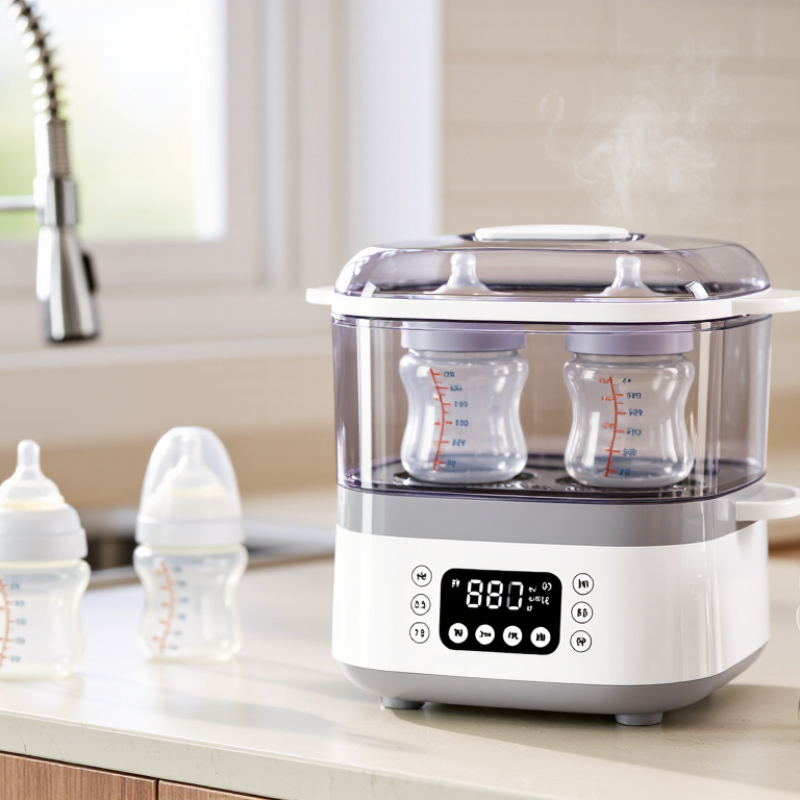
For baby sterilizer suppliers worldwide, CE certification shows that a product meets applicable European Union safety, health, and environmental requirements. It is not simply a quality badge. It is a compliance process.
A responsible supplier should identify the correct directives and standards before production begins. For an electric baby bottle sterilizer and dryer, this may involve electrical safety, electromagnetic compatibility, material restrictions, and product safety requirements. The supplier should complete risk assessments, maintain technical files, and provide a Declaration of Conformity. Testing should cover realistic use, including steam exposure, heating cycles, drying temperatures, and plug safety. Ask for recent test reports, not only a logo printed on packaging.
Details matter. Reliable suppliers can explain their factory controls, inspection records, and corrective actions. They should also show how they manage component changes. A different heating element can affect the original test results. CE marking does not automatically prove performance, durability, or suitability for every household. It also does not mean that an independent authority approved every product. In some cases, third-party involvement may apply, depending on the product and legislation.
Be cautious.
Supplier documents can contain gaps or outdated references. Even experienced teams make mistakes. Buyers should verify model numbers, report dates, and manufacturer information carefully. A practical factory audit, sample test, and review by a qualified compliance professional can reveal problems before shipment. That extra step is sometimes overlooked. It should not be.
| Assessment Dimension | What CE Compliance Means | Evidence a Supplier Should Provide | Practical Buyer Check |
|---|---|---|---|
| Meaning of the CE Mark | The manufacturer declares that the product meets applicable European Union health, safety and environmental requirements. | A valid EU Declaration of Conformity identifying the product, applicable legislation and responsible manufacturer. | Confirm that the declaration matches the exact model, electrical rating and intended use. |
| Applicable EU Legislation | A baby sterilizer may fall under rules such as the Low Voltage Directive, Electromagnetic Compatibility Directive, RoHS Directive and, where applicable, other product-specific legislation. | A legislation matrix showing which EU requirements apply and why. | Check that the supplier has assessed electrical, electromagnetic, material and chemical risks rather than listing CE generically. |
| Product Classification | The compliance route depends on the product design, power supply, heating system, controls and intended market. | A documented classification and conformity-assessment rationale. | Ask whether the same assessment covers countertop, portable, UV, steam or multifunction models. |
| Electrical Safety | The equipment should be designed to reduce risks such as electric shock, overheating, fire and abnormal operation. | Electrical safety test reports, circuit protection details, insulation information and rated-input data. | Verify voltage, frequency, plug configuration and safety controls for the destination market. |
| Electromagnetic Compatibility | The sterilizer should not create unacceptable electromagnetic disturbance and should tolerate the expected electromagnetic environment. | EMC test reports covering emissions and immunity, where applicable. | Ensure reports identify the same hardware, firmware and operating modes as the supplied product. |
| Restricted Substances | Electrical and electronic components generally need to comply with applicable restrictions on hazardous substances under EU RoHS requirements. | Material declarations, supplier declarations or laboratory reports for relevant components. | Request current documentation for plastics, cables, solder, circuit boards and metal coatings. |
| Risk Assessment | The manufacturer must identify reasonably foreseeable hazards and implement suitable risk-reduction measures. | A product risk assessment covering heat, steam, water, electrical faults, sharp edges, misuse and cleaning. | Check whether risks to infants, caregivers and users handling hot water or steam are addressed. |
| Technical Documentation | The manufacturer must compile technical evidence demonstrating conformity and retain it for the period required by applicable EU rules. | Technical file index, drawings, specifications, bills of materials, test reports and production-control information. | Confirm that documentation is controlled, traceable and available for the exact production version. |
| Harmonised Standards | Using relevant harmonised European standards can provide a recognized way to demonstrate conformity with applicable essential requirements. | A standards list with editions, applied clauses and any justified deviations. | Look for standards references that correspond to the product category and current design. |
| Testing and Laboratory Quality | Testing should be technically appropriate, repeatable and performed on representative samples. | Complete reports showing sample identification, test conditions, results, deviations and laboratory details. | Prefer reports from competent laboratories and verify that the sample description matches the finished product. |
| Notified Body Involvement | A notified body is required only when the applicable EU legislation specifies third-party assessment; many electrical products use manufacturer self-declaration. | If involved, the notified body’s name, identification number, scope and relevant certificate or assessment record. | Do not treat a certificate from a private testing organization as automatically equivalent to CE authorization. |
| Declaration of Conformity | The declaration is a legally significant statement from the manufacturer accepting responsibility for conformity. | Signed declaration with product identification, legislation, standards, manufacturer details and authorized signatory. | Check the issue date, model number, signature and consistency with the user manual and label. |
| Labeling and Instructions | The product should carry required markings and safety information, with instructions suitable for the intended users and market. | Label artwork, rating plate, warnings, user manual and maintenance instructions. | Review steam-burn warnings, hot-surface instructions, water-level limits, cleaning guidance and language coverage. |
| Production Consistency | CE compliance applies to products placed on the EU market, so mass-produced units should remain consistent with the assessed design. | Incoming inspection, process controls, final testing, change-control records and traceability procedures. | Ask how component substitutions, firmware changes and factory transfers are reviewed before shipment. |
| Post-Market Responsibility | Manufacturers and economic operators must address complaints, incidents, corrective actions and applicable market-surveillance requests. | Complaint-handling procedure, corrective-action process, spare-parts policy and incident escalation contacts. | Evaluate response times, recall readiness and availability of replacement components. |
| Supplier Selection Benchmark | A strong supplier demonstrates documented conformity, transparent technical evidence, stable production controls and reliable after-sales support. | A complete compliance package rather than a standalone CE logo or generic certificate. | Use a weighted review covering safety, documentation, testing, factory control, delivery capability and service quality. |
Note: CE marking is generally a manufacturer’s declaration of conformity, not a universal quality certification or an endorsement by the European Union. The exact legal requirements depend on the product design, intended use and EU market rules applicable at the time of placing the product on the market.
No. CE marking shows conformity with applicable European requirements. Request the EU Declaration of Conformity and matching test reports. The documents must cover the exact shipped model. CE is not a universal quality award.
Request the EU Declaration of Conformity, relevant test reports, and electrical safety information. Check the model number carefully. Instructions should use the target market’s language. Older documents can create confusion.
Ask how heating elements, food-contact plastics, seals, and electrical parts are tested. Review batch traceability and inspection records. Request product samples for hands-on checks. Polished brochures are not enough.
Look for uneven moisture after a cycle. Check sharp edges and difficult-to-clean corners. Test the control labels with wet hands. Inspect the lid, racks, seals, and vents. Small details matter.
Steam models use heated water and high-temperature vapor. Dry-heat models use controlled hot air and longer cycles. UV-C cabinets use light-based disinfection without water. Combination units may add drying or storage.
Not always. Sensors, automatic shutoff, cycle reminders, and drying fans can improve convenience. More features can also make operation confusing. Simple controls may help tired caregivers avoid loading mistakes.
Water hardness can reduce performance and leave mineral deposits. Blocked vents may affect steam or drying. Overloading can create uneven treatment. Poor cleaning also matters. Laboratory results may not mirror every home.
Confirm warranty terms, spare-part availability, complaint handling, and regional response times. Ask how replacement seals and electrical parts are supplied. Record promised response times in writing. Support can matter more than a low quotation.
No. An audit can reveal production weaknesses, but no checklist catches everything. Recheck important claims through an independent laboratory when order volume is high. Consistent batches and transparent communication are stronger signals. Supplier history still deserves careful review.
Choosing a reliable Ce Certified Baby Sterilizer supplier requires more than comparing prices. CE certification indicates that the product has been assessed against relevant European safety, health, and environmental requirements. Buyers should examine electrical safety, material quality, temperature control, sterilization performance, user protection, labeling, and technical documentation. A trustworthy supplier should clearly explain its compliance process, testing records, quality management, production capacity, and after-sales support.
Global suppliers may offer steam sterilizers, UV sterilizers, drying units, multifunctional models, and compact solutions for household or professional use. When evaluating manufacturers, consider their experience, production consistency, customization capability, delivery reliability, and communication standards. It is also important to confirm whether the product specifications match the needs of your target market and customer group. By balancing certification, safety, technology, service, and total cost, businesses can select a dependable partner and provide parents with effective, convenient, and responsibly manufactured sterilization equipment.