Leave Your Message
0%

Choosing the right UV bottle sterilizer supplier for buyers around the world isn’t just about comparing prices or lamp wattage—there’s a lot more to it. A reliable supplier should walk you through things like ultraviolet dosage, exposure times, how the chamber is designed, and whether it’s compatible with different bottles. It’s also smart to look at test reports, safety certifications, warranty details, and what kind of after-sales support they offer. A clear, detailed spec sheet really helps, and having a responsive tech team on hand makes a big difference, too.

Dr. William A. Rutala, a well-known expert in disinfection and sterilization, once said, “Disinfection is not a substitute for cleaning.” That totally applies here. Milk residue, powder, and moisture can block UV-C light from effectively sterilizing bottles, so good suppliers should explain how to clean the units, when to replace lamps, and how their sensors and safety interlocks work. These details aren’t just marketing hype—they show real professional know-how.

The best suppliers usually serve a range of clients—hospitals, childcare centers, labs, and even everyday households, each with different needs. For example, Philips might highlight their solid engineering background, while smaller specialized brands might focus on compact models perfect for feeding bottles and accessories. When shopping around, compare things like how big the chamber is, record of how many cycles they’ve run, plug types for different regions, language options, and how easy it is to get spare parts. Don’t forget to ask for real-life testing data!

Of course, not every claim out there can be taken at face value. Some sites might toss around the word “sterilizer” pretty loosely, but actual performance can vary a lot depending on the materials used and how the testing was done—so pay attention to those details. A supplier that’s open to technical questions is usually more trustworthy. Just remember, no one UV bottle sterilizer is going to work perfectly for every bottle shape, material, or environment. This guide aims to help you spot reputable brands, understand their limitations, and know what evidence to look for before making your choice.
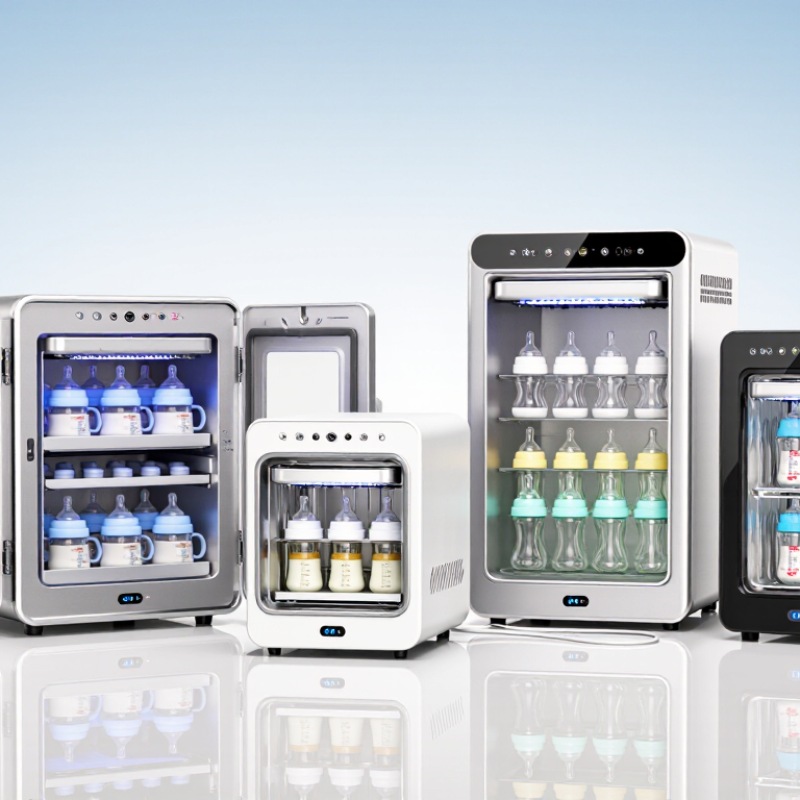
Top UV Bottle Sterilizer Suppliers for Global Buyers?

UV Bottle Sterilizers: Definition, Purpose, and Main Applications

A UV bottle sterilizer uses ultraviolet-C light to reduce microorganisms on exposed bottle surfaces. It usually combines reflective chambers, safety interlocks, and timed UV-C cycles. Its purpose is practical: drying and disinfecting feeding bottles, nipples, breast-pump parts, and small household items after washing. The word “sterilizer” can overpromise, however. UV performance depends on light dose, distance, shadows, and surface cleanliness.

The Centers for Disease Control and Prevention advises cleaning feeding equipment before sanitizing it, especially for infants under two months or with weakened immunity. UV-C cannot reliably reach milk residue inside a folded nipple. Buyers should examine test reports, measured irradiance, cycle records, and safety controls. The International Ultraviolet Association also stresses validated dose delivery rather than lamp power alone. That distinction matters.

Market interest is rising. Grand View Research reported strong growth in the broader UV disinfection equipment market, supported by healthcare and household applications. Exact forecasts vary between reports. Treat them as directional, not guaranteed. A reliable baby bottle sterilizer supplier should explain lamp replacement, electrical certifications, factory quality controls, and regional plug requirements. Applications extend beyond nurseries to clinics, maternity facilities, and travel accommodation. Yet users still need careful washing and correct loading. I would question any supplier claiming complete protection from one short cycle.

How UV Bottle Sterilizers Work and Which Germs They Target

UV bottle sterilizers use ultraviolet-C light to damage the DNA or RNA of microorganisms. Most units operate between 200 and 280 nanometers. This prevents many bacteria and viruses from reproducing. Some models also reduce fungi and yeast on exposed surfaces. They do not remove milk residue, dust, or skin oils. Cleaning must come first.

UV-C works only where light reaches. Bottle threads, narrow necks, and folded nipples can create shadows. A bottle sterilizer and dryer may improve coverage by rotating items or using reflective interiors.

Drying also matters because damp areas can support later contamination. However, performance varies with lamp strength, exposure time, distance, and surface cleanliness. Claims should include laboratory methods, test organisms, and independent verification. Without those details, confidence should remain limited.

Tips:

Rinse and wash bottles before UV treatment.

Keep parts separated inside the chamber.

Follow the stated loading pattern.

Replace aging lamps when required.

Check seals and vents regularly.

Do not assume a longer cycle fixes blocked light. It may not.

For global buyers comparing suppliers, request measurable reduction data rather than relying on broad “sterilizing” language.

Even well-designed equipment has limits, and daily handling can undo careful disinfection.

Key Features to Compare Among Global UV Bottle Sterilizer Suppliers

When comparing global UV bottle sterilizer suppliers, examine performance before appearance. A reliable supplier should state the UV-C wavelength, delivered dose, cycle time, and test method. “UV-C” alone is not enough. Ask for independent laboratory reports and clear operating limits.

Check whether the chamber exposes every bottle surface. Rotating racks, reflective interiors, and spacing can reduce shadowed areas. Capacity matters too. A family unit may hold six bottles, while a childcare facility needs larger removable racks. Confirm compatibility with glass, silicone, plastic, nipples, and pump parts. The supplier should explain drying temperature, residual moisture, and material safety. This is especially important when selecting a mam bottle sterilizer for daily use.

Safety details reveal supplier quality. Look for lid interlocks, automatic shutoff, UV leakage testing, overheat protection, and accessible cleaning areas. Documentation should include user instructions, maintenance steps, warranty terms, replacement parts, and regional service contacts. Packaging quality also matters; damaged hinges or cracked trays can appear after long-distance shipping. I have found that attractive product pages sometimes omit dose verification. That gap deserves questioning. A responsive supplier may not be the cheapest, but technical answers should be specific, consistent, and easy to verify. Review sample units when possible, because real handling often exposes weak buttons, noisy fans, or awkward racks.

Leading Regions and Supplier Types in the International Market

Global buyers usually begin with region, but supplier capability matters more than a map. East Asian manufacturers often offer broad production capacity, fast customization, and competitive unit pricing. Many support OEM or ODM projects for private-label bottle sterilizers.

However, written specifications can differ from actual performance. Request irradiance data, chamber dimensions, lamp life, and cycle records. Ask for independent test reports.

Suppliers in Europe often emphasize engineering documentation, traceability, and controlled quality systems. North American vendors may add distributor support, installation guidance, and responsive replacement-part services.

Regional distributors remain useful when buyers need local voltage options, warehouse stock, and technical communication. Medical, laboratory, and childcare-equipment integrators may provide stronger application advice than general trading companies. Yet their prices can include several service layers. Compare the full cost.

For Southeast Asian purchasing teams, regional factories can shorten delivery routes and simplify after-sales coordination. Still, capacity claims deserve careful checking during peak seasons. Ask whether testing covers bottle shape, liquid residue, and shadowed surfaces.

UV light cannot reach every enclosed area. That limitation should appear in operating instructions.

A practical audit includes sample testing, batch records, warranty terms, and relevant electrical safety documentation.

One uncomfortable lesson is common: the cheapest quotation may omit validation work. Some buyers also overlook replacement UV modules until a shipment is already delayed.

Safety Standards, Certifications, and Quality Requirements

Top UV Bottle Sterilizer Suppliers for Global Buyers?

Safety should begin with measured ultraviolet output, not attractive packaging. In practical testing, a clean-looking chamber can still hide weak irradiance. Ask suppliers for wavelength data, dose measurements, exposure time, and test conditions. UV-C systems commonly target around 254 nanometres, but actual performance depends on distance, shadows, lamp aging, and bottle geometry.

IEC 62471 evaluates photobiological risks to eyes and skin. ISO 15858 provides safety information for UV-C devices, while IEC 60335 standards address household appliance safety. Look for independent reports covering electrical insulation, overheating, ozone emissions, and accidental lid opening. Certification marks alone are not enough. The test number and issuing laboratory should be verifiable. The U.S. FDA warns that direct UV-C exposure can injure skin and eyes, making interlock testing essential. Small gaps matter.

The WHO/UNICEF Joint Monitoring Programme reported that 2.2 billion people lacked safely managed drinking water in 2022. That figure increases the need for reliable household treatment, but UV sterilization does not remove chemicals or physical dirt. Suppliers should state these limits clearly. Request RoHS documentation, food-contact material declarations, and aging tests for plastics. I would also check performance after repeated cycles, not only on day one. Some supplier documents remain vague. That is a warning sign.

Top UV Bottle Sterilizer Suppliers for Global Buyers: Safety Standards, Certifications, and Quality Requirements

UV Spectral Bands Relevant to Product Evaluation

UV-C covers 100–280 nm and is the wavelength band generally assessed for germicidal applications, while UV-B covers 280–315 nm and UV-A covers 315–400 nm. Global buyers should request wavelength and irradiance test reports, validated exposure-dose data, shielding and interlock verification, and photobiological safety assessment according to IEC 62471. Electrical, electromagnetic compatibility, material-restriction, traceability, and quality-management documentation should also be reviewed against the requirements applicable to the destination market.

How to Evaluate Suppliers, Pricing, Customization, and Support

Top UV Bottle Sterilizer Suppliers for Global Buyers?

Supplier evaluation should begin with test evidence, not glossy photographs. Grand View Research valued the global UV disinfection equipment market at about USD 6.1 billion in 2023, with strong projected growth. That expansion attracts inexperienced suppliers. Ask for independent test reports, UV-C wavelength data, exposure time, and delivered dose. The U.S. FDA notes that UV effectiveness depends on distance, shadows, surface condition, and exposure duration. A feeder bottle sterilizer should reach bottle interiors, nipples, caps, and narrow threads. Many units struggle there.

Pricing needs careful comparison. A lower quotation may exclude mold fees, packaging changes, spare lamps, or software adjustments. Request a complete landed-cost sheet, including sample charges and replacement parts. Customization should cover basket size, cycle settings, plug standards, language labels, and safety interlocks. Do not accept “99.9% sterilization” without defining the tested organisms and laboratory method. I have seen impressive claims hide ordinary cleaning limitations. That deserves skepticism.

Tips: Build a supplier scorecard before requesting quotes. Give testing 30% weight, customization 20%, support 20%, price 20%, and delivery reliability 10%. Check response time with a technical question. Ask for production photos and a traceable quality record. Also confirm warranty terms in writing. A supplier that answers quickly may still lack engineering depth. Reflect on that gap before placing a large order.

China Wireless Outdoor Travel Baby Bottle Warmer Suppliers: Fast Heating Solutions for Breast Milk and Formula

China wireless outdoor travel baby bottle warmer suppliers are developing practical heating solutions for parents who need reliable feeding support away from home. Designed for busy lifestyles, this compact warmer uses a baby-grade 316 stainless steel inner tank for durability and hygienic use. Its portable construction fits easily into a diaper bag, while the generous storage capacity helps parents prepare formula, warm breast milk, or heat water during travel, outdoor activities, and daily commutes.

USB heating technology provides a convenient power option through compatible portable power sources, making the device suitable for locations without direct access to a wall outlet. Precise temperature control helps parents select a suitable warming level and reduce the risk of overheating, supporting more consistent preparation for infants. As experienced China factory suppliers, manufacturers can offer customized capacity, appearance, packaging, labeling, and functional specifications according to buyer requirements. Quality-focused production, responsive communication, efficient delivery, and comprehensive after-sales support make these suppliers suitable for distributors, retailers, and businesses seeking dependable outdoor baby feeding products.

FAQS

What technical data should a supplier provide for a UV bottle sterilizer?

Request the UV-C wavelength, delivered dose, cycle time, and test method. “UV-C” alone proves very little.

How can I check whether the sterilizer reaches every bottle surface?

Look for rotating racks, reflective interiors, and practical spacing. Narrow bottle threads and shaded areas need special attention.

What materials should the sterilizer support?

Confirm compatibility with glass, silicone, plastic, nipples, caps, and pump parts. Ask about drying temperature and residual moisture.

What safety features are important?

Look for lid interlocks, automatic shutoff, UV leakage testing, and overheat protection. Simple details matter.

How should I compare capacity between different units?

A household unit may hold six bottles, while a childcare facility needs larger removable racks. Check usable space, not advertised capacity.

What should a complete price quotation include?

Request sample charges, packaging changes, replacement parts, mold fees, and shipping-related costs. A low price may hide important extras.

How can I judge claims such as “99.9% sterilization”?

Ask which organisms were tested, under what conditions, and by which laboratory. Do not accept vague percentages.

What documents should a reliable supplier provide?

Request operating instructions, maintenance steps, warranty terms, replacement-part details, and regional service contacts. Written answers are easier to verify.

Should I inspect a sample unit before placing a large order?

Yes, when possible. Test the buttons, fan noise, rack movement, hinges, and cleaning access.

What warning signs deserve careful reflection?

Attractive pages may omit dose verification. Fast replies may still hide weak engineering. I would question both gaps.

Conclusion

A Uv Bottle Sterilizer is a device that uses ultraviolet-C light to reduce microorganisms on feeding bottles, breast pump parts, pacifiers, and other small items. By exposing surfaces to controlled UV light, it can target many common bacteria, viruses, and molds without relying on chemical residues. However, effective results depend on proper loading, adequate exposure time, clean surfaces, and direct light contact, since shadows and blocked areas may reduce performance.

For global buyers, comparing suppliers involves reviewing sterilization power, chamber capacity, cycle settings, drying functions, energy efficiency, materials, and user safety features. Reliable suppliers should provide clear testing data, traceable quality procedures, and certifications appropriate for the target market. Buyers should also assess manufacturing experience, production consistency, customization options, minimum order quantities, pricing transparency, packaging, warranty coverage, spare parts, and after-sales support. A careful evaluation of regional supplier capabilities and communication responsiveness can help purchasers select safe, durable, and practical products for different household, childcare, and healthcare-related applications.
Lila

Lila

Lila is a seasoned marketing professional at Foshan Nanhai Jetway Import and Export Co., Ltd., a specialized manufacturer of maternal and infant care appliances. With a robust background in marketing and a deep understanding of the company's innovative product line, Lila plays a crucial role in......
Previous 10 Best Baby Appliance Wholesale Suppliers for Global Buyers